Yes Bank Q3 FY2026 Results: Profit Jumps Over 30%, Asset Quality Improves – Full Analysis
By Kaushik Brahmakshatriya
Published On 19 April 2026.
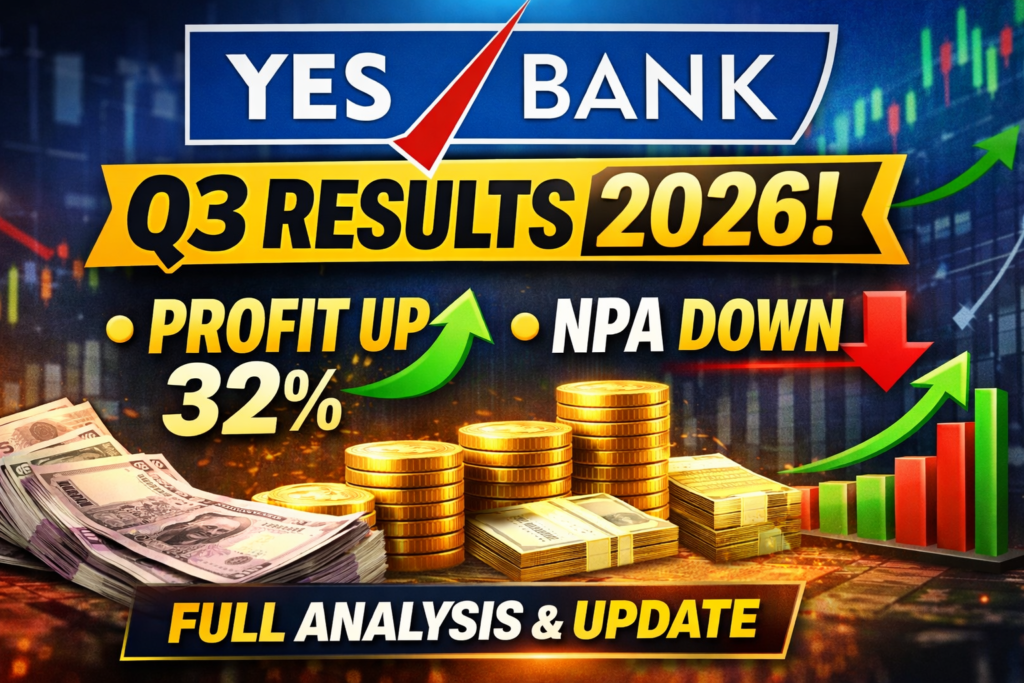
Yes Bank Q3 FY2026 results show 32% profit growth,
Yes Bank has delivered a strong performance in Q3 FY2026, continuing its turnaround story with improved profitability, better asset quality, and steady growth in deposits and loans. The latest quarterly results highlight the bank’s disciplined strategy and growing stability in India’s competitive banking sector.
Key Financial Highlights (Q3 FY2026)
* Net Profit: ₹348 crore (up ~32% YoY)
* Net Interest Income (NII): ₹2,210 crore (growth of ~6% YoY)
* Net Interest Margin (NIM): 2.6%
Gross NPA (GNPA): 2.0% (improved from ~2.2% YoY)
* Net NPA (NNPA): 0.9% (down from ~1.0% YoY)
* Provision Coverage Ratio (PCR): 76%
* Total Deposits: ₹2.45 lakh crore (growth of ~18% YoY)
* CASA Ratio: ~30%
* Advances (Loans): ₹2.15 lakh crore (growth of ~14% YoY)
Strong Profit Growth Driven by Core Income
Yes Bank reported a net profit of ₹348 crore, marking a solid year-on-year increase of around 32%. This growth was primarily supported by stable net interest income and lower provisioning requirements.
The Net Interest Income (NII) rose to ₹2,210 crore, reflecting improved lending activity and better yield management. Although margins remain moderate at 2.6%, the bank has maintained consistency despite changing interest rate conditions.
Asset Quality Sees Continued Improvement
Asset quality remains a key positive for Yes Bank in Q3 FY2026:
* Gross NPA reduced to 2.0%, indicating better loan recovery
* Net NPA declined to 0.9%, showing lower stress in the loan book
* Provision Coverage Ratio improved to 76%, strengthening risk buffers
The steady decline in bad loans reflects the bank’s cautious lending practices and successful recovery strategies. Lower
* slippages and controlled credit costs have also supported profitability.
Deposits and Loan Book Expansion
Yes Bank continues to grow its core banking business:
Deposits Growth
Total deposits increased to ₹2.45 lakh crore
Growth driven by retail deposits and CASA accounts
CASA ratio improved to around 30%, enhancing low-cost funding
Advances Growth
Loan book expanded to ₹2.15 lakh crore
Strong growth in retail, MSME, and corporate lending segments
Focus on diversified lending reduces risk concentration
This balanced growth strategy strengthens the bank’s long-term financial stability.
Operational Efficiency & Digital Banking
The bank is actively improving efficiency through digital transformation:
* Increased adoption of mobile and online banking platforms
* Improved cost-to-income ratio due to better cost control
* Expansion of digital services for retail and business customers
These efforts are helping Yes Bank enhance customer experience while keeping operational expenses in check.
Future Outlook and Strategy
Management of Yes Bank remains confident about sustained growth. Key focus areas include:
* Increasing retail and SME lending share
* Further reduction in NPAs
* Improving profitability ratios like Return on Assets (ROA)
* Strengthening digital banking ecosystem
With improved capital adequacy and a cleaner balance sheet, the bank is better positioned to compete with leading private sector banks in India.
Risks and Challenges
While the overall performance is encouraging, investors should keep an eye on:
* Pressure on margins due to interest rate fluctuations
* Competition from larger banks like HDFC Bank and ICICI Bank
* Need for continued improvement in asset quality
Consistent execution will be crucial for maintaining growth momentum.
Conclusion: A Steady Turnaround Story
Yes Bank’s Q3 FY2026 results reflect a stable and improving financial position. The bank has successfully strengthened its fundamentals with better profitability, improving asset quality, and steady business growth.
Disclaimer
This blog does not provide financial, investment, or trading advice. All content is for educational and informational purposes only. Please consult a certified financial advisor before making any investment decisions. The author will not be responsible for any financial losses incurred